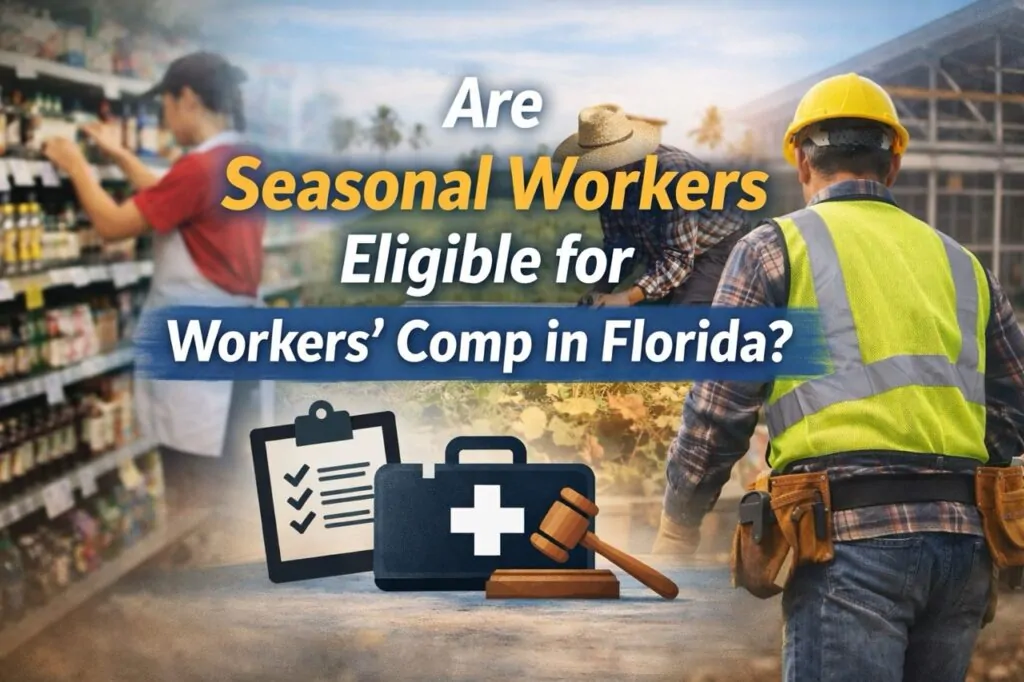
Winter brings a surge of seasonal jobs across Florida. Tourism increases. Retail demand rises. Farms and resorts hire extra help. Many workers take short term roles during these busy months. However, seasonal work still carries real risks. That is why understanding seasonal workers comp matters early.
Seasonal employment in Florida usually means work tied to a specific time or demand. These jobs often start and end around peak seasons. Common examples include hotel staff, restaurant workers, retail associates, farm laborers, theme park employees, and holiday event staff. Although these roles may be temporary, they still involve regular job duties and employer supervision.
Importantly, the length of a job does not automatically remove workers’ compensation eligibility. In fact, many seasonal employees are treated the same as full time workers under Florida law. Coverage often depends on the employer’s legal requirements, not how long you were hired. Therefore, understanding how seasonal work is defined helps protect your rights from the start.
Does Florida Workers’ Compensation Cover Seasonal Employees?
Many seasonal workers may qualify for workers’ compensation benefits in Florida. Employers cannot deny coverage simply because a job is temporary. Florida operates under a no-fault workers’ compensation system. This means injured workers can receive benefits regardless of who caused the accident. Eligibility depends on whether your employer carries required coverage.
Your job classification also affects your rights. Seasonal workers comp protection applies when employers meet state coverage requirements. You may be eligible if your employer has the minimum number of employees. The type of business matters for coverage thresholds. Construction companies face different rules than retail stores.
Understanding these distinctions helps you know your rights. Short-term employment does not automatically remove your eligibility. Many seasonal employees can receive full benefits after workplace injuries.
Which Employers Must Carry Workers’ Comp in Florida?
Florida law requires different employers to carry workers’ compensation insurance based on their industry and workforce size. Understanding these requirements helps seasonal workers know if they have coverage.
General Businesses
Most non-construction businesses must carry workers’ compensation coverage when they employ four or more people. This count includes full-time, part-time, and seasonal workers. Temporary employees also count toward this threshold. Corporate officers who are not exempt must be included in the employee count. The four-employee rule applies across many industries including retail, hospitality, and service businesses. Employers cannot exclude seasonal workers from this count simply because their employment is temporary.
Construction Employers
Construction companies face stricter requirements than other industries. These businesses must carry workers’ compensation insurance with just one employee. Even the business owner counts if the company is incorporated. The higher risk of injury in construction explains these stricter rules. All construction workers deserve protection regardless of employment length. Seasonal construction workers receive the same coverage as year-round employees. Subcontractors must also carry their own coverage or become the responsibility of the general contractor.
Agricultural Employers
Agricultural businesses have unique coverage thresholds under Florida law. These employers must carry seasonal workers comp coverage with six or more regular employees. They also need coverage with 12 or more seasonal employees working over 30 days during a season. The seasonal work cannot exceed 45 days total in a calendar year.
Farm work involves heavy machinery and physical labor. These factors create significant injury risks. Meeting coverage requirements protects agricultural workers and ensures legal compliance. Many seasonal farm workers qualify for full workers’ compensation benefits.
Are Seasonal Workers Considered Employees or Independent Contractors?
Job title alone does not determine your classification under Florida law. Many employers incorrectly label seasonal workers as independent contractors. This misclassification can deny you important benefits. Florida looks at the actual working relationship to determine your status. Control over your work is the most important factor. If your employer dictates when, where, and how you work, you are likely an employee. Payment structure also matters for classification purposes.
Employees typically receive regular wages while independent contractors work project-based. The tools and equipment you use affect your status. Independent contractors usually provide their own resources. Misclassification can prevent you from accessing seasonal workers comp benefits. Understanding the difference protects your rights. If you believe you were misclassified, legal help may be available. Employers cannot avoid coverage requirements by calling employees contractors.
What Benefits May Be Available to Seasonal Workers?
Seasonal workers who qualify for workers’ compensation can access several important benefits. These protections help injured employees recover and maintain financial stability during treatment.
Medical Benefits
Workers’ compensation may cover all authorized medical treatment for work-related injuries. This can include doctor visits, hospital care, and emergency room treatment. Physical therapy and rehabilitation services may also be covered. Prescription medications related to your injury can receive coverage. You must see authorized doctors selected by your employer or their insurance carrier. Following proper medical procedures protects your right to benefits. Unauthorized treatment may not receive payment. Medical benefits continue as long as treatment remains necessary and related to your workplace injury.
Wage Replacement Benefits
Injured seasonal workers may receive partial wage replacement while unable to work. Temporary total disability benefits can provide two-thirds of your average weekly wage. Florida caps these benefits at a maximum amount that changes annually. Temporary partial disability may apply if you can work at reduced capacity. Permanent disability benefits can become available for lasting injuries. The length of your employment does not always determine benefit duration. Your injury severity and recovery timeline matter more. Seasonal workers comp benefits continue based on medical need, not job length.
Death Benefits for Families
If a workplace accident causes a worker’s death, their family may receive benefits. Workers’ compensation can cover funeral and burial expenses up to a specified amount. Dependents may also receive ongoing financial support. Spouses and children can qualify for death benefits. The total death benefit amount is capped under Florida law. These tragic situations require immediate legal guidance. Families should understand their rights after losing a loved one to a work accident. Death benefits provide crucial support during difficult times.
Common Challenges Seasonal Workers Face With Workers’ Comp
Insurance companies often deny seasonal workers comp claims based on employment length. They may argue that short-term employees do not deserve benefits. This position is frequently incorrect under Florida law. Delayed reporting creates problems for many seasonal workers. You must report your injury within 30 days to protect your rights. Employer disputes about whether an injury happened at work are common. Some employers claim seasonal workers are independent contractors to avoid coverage.
Misclassification denies workers their rightful benefits. Missing documentation can weaken your claim significantly. Many seasonal employees do not understand their rights or reporting requirements. Fear of losing their job prevents some workers from filing claims. Others assume temporary employment means no coverage exists. These challenges make legal guidance important after workplace injuries. Understanding your rights helps you fight unfair denials.
Steps Seasonal Workers Should Take After a Work Injury
Taking the right steps immediately after a workplace injury protects your health and legal rights. Proper documentation strengthens your workers’ compensation claim and helps you receive deserved benefits.
Follow these important steps:
- Report your injury to your supervisor or employer immediately in writing
- Request medical treatment from an authorized workers’ compensation doctor
- Document the incident with photos, witness statements, and written descriptions
- Keep copies of all medical records, bills, and correspondence
- File your workers’ compensation claim within required deadlines
- Contact a Florida workers’ compensation attorney if your claim is denied or delayed
Time limits matter significantly in seasonal workers comp cases. Missing deadlines can result in losing your right to benefits. Proper reporting creates an official record of your injury. This documentation becomes critical if disputes arise later.
How a Florida Workers’ Compensation Lawyer May Help
A workers’ compensation attorney can assist seasonal workers with complex claims. Lawyers may help gather necessary medical documentation and employment records. They can explain your rights under Florida law in clear terms. Legal representation may prove valuable when insurance companies deny seasonal workers comp claims. Attorneys understand common tactics insurers use to minimize payouts. They can challenge misclassification and fight for proper employee status. Rosenberg & Rosenberg offers over 50 years of experience in Florida workers’ compensation law. Our family-run firm provides multilingual support in English, Spanish, and Creole. We understand the unique challenges seasonal workers face. Legal guidance may help you secure the full benefits you deserve. Many workers’ compensation attorneys offer free consultations to evaluate your case.
Understanding Your Rights as a Seasonal Worker in Florida
Seasonal work does not mean giving up legal protections. Many seasonal workers still have rights under Florida workers’ compensation laws. If you are injured on the job, you may be eligible for medical care and wage benefits. Therefore, it is important to understand how coverage works. Each situation is different, and eligibility depends on several factors.
Taking time to learn your options helps you make informed decisions. Moreover, knowing your rights can reduce stress after an injury. If questions arise about seasonal workers comp, speaking with a qualified professional can help clarify next steps. Rosenberg & Rosenberg, P.A. is available to discuss general workers’ compensation concerns.
Disclaimer: The information in this blog is for general informational purposes only and does not constitute legal advice. Every workers’ compensation case is unique. Outcomes depend on specific facts and circumstances. This content should not be used as a substitute for legal advice from a licensed Florida attorney. For advice about your specific situation, please contact Rosenberg & Rosenberg, P.A. for a consultation. Past results do not provide any prediction of future outcomes.