A car crash is stressful no matter how it happens. But a Lyft accident adds layers that a typical collision does not. When a rideshare vehicle is involved, questions about insurance coverage, driver status, and liability can make the process far more complicated than a standard crash claim.
Knowing the difference between a Lyft accident vs car accident matters before you speak to an insurer or accept any offer. In this blog, you will get to know exactly what sets these two types of claims apart and what that means for you.
What Is the Difference Between a Lyft Accident and a Regular Car Accident?
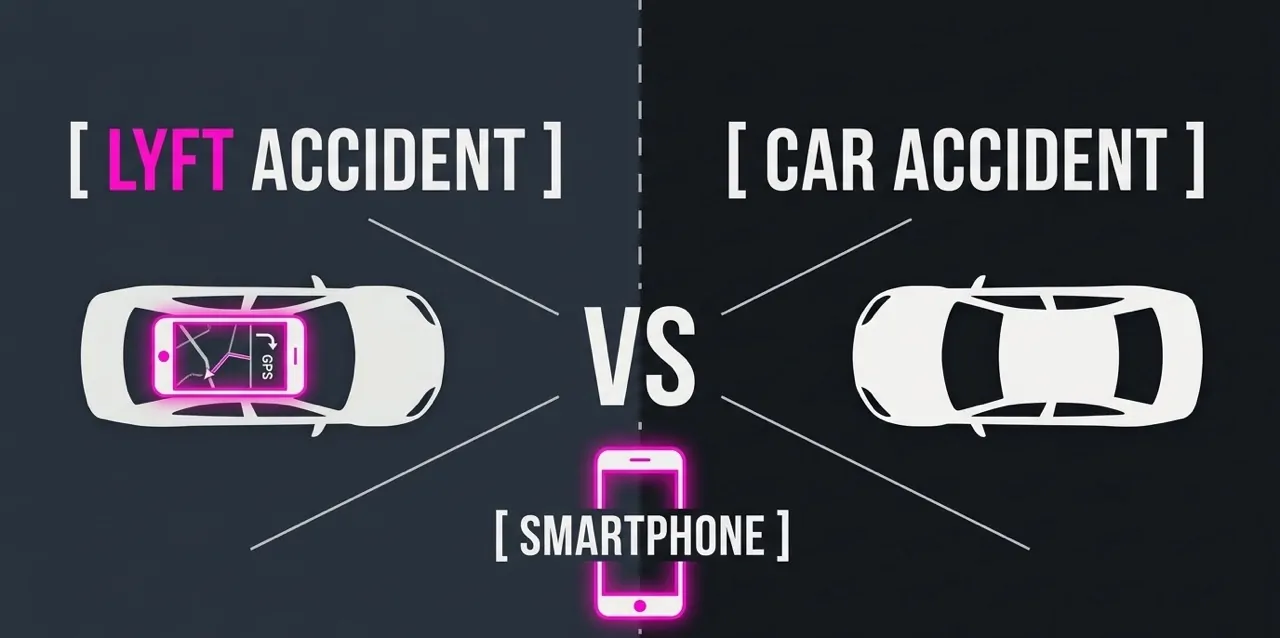
A regular car accident generally involves two or more private drivers and their individual insurance policies. The process, while stressful, follows a relatively predictable path. A Lyft accident is different. It may involve the rideshare driver, Lyft’s corporate insurance coverage, other motorists, and critical questions about whether the driver was actively using the Lyft app at the time of the crash.
Each of those factors can affect which insurance applies, who may be liable, and how the claims process unfolds. That added complexity is what separates a rideshare accident from a standard collision under Florida law.
Insurance Coverage Is Often More Complex in Lyft Accidents
In a typical car accident, you deal with the at-fault driver’s insurer. In a Lyft accident, the insurance picture can shift depending on several factors that have nothing to do with how the crash happened.
Here are some of the key insurance factors that can make Lyft accident claims more complicated than traditional crash claims.
The Driver’s Status Matters
Lyft’s insurance coverage changes based on what the driver was doing at the time of the crash. If the driver had the app off, personal insurance applies. If the app was on but no ride was accepted, limited contingent coverage may apply. If a ride was active, Lyft’s full policy may come into play.
Multiple Insurance Policies May Apply
A Lyft accident may trigger more than one insurance policy at the same time. The driver’s personal auto insurance and Lyft’s rideshare coverage may both be relevant depending on the driver’s status. Figuring out which policy responds first is one of the early challenges in a rideshare claim.
Coverage Limits Can Differ
The amount of coverage available in a Lyft accident depends heavily on the phase of the trip. During an active ride, Lyft provides up to $1 million in third-party liability coverage. During earlier phases, coverage limits are significantly lower. Those differences can directly affect how much compensation may be available.
Determining Applicable Coverage Can Take Time
Identifying the correct insurer is not always immediate. Disputes between Lyft’s insurance carrier and the driver’s personal insurer about which policy applies can delay the process. That delay may affect when medical bills get paid and how quickly a claim moves forward.
Who May Be Liable After a Lyft Accident?
Liability in a regular car accident is often limited to the drivers directly involved in the collision. In a Lyft accident, determining responsibility can be more complicated because multiple parties may potentially share fault depending on the facts of the case. The Lyft driver may bear responsibility. Another driver on the road may have contributed to the crash. In some situations, third parties whose actions played a role may also be relevant.
Common Parties That May Be Involved in a Lyft Accident Claim
Rideshare accidents rarely involve just two people. Depending on the circumstances, several parties may each play a role in how a claim is handled and resolved. Depending on the circumstances, these are some of the parties that may play a role in a Lyft accident claim.
- The Lyft driver
- Another negligent driver involved in the collision
- Multiple drivers when more than two vehicles are involved
- Insurance carriers handling coverage disputes
- Injured passengers riding in the Lyft vehicle
- Pedestrians or cyclists struck during the accident
- Other third parties whose actions contributed to the crash
How Compensation May Differ Between Lyft and Regular Car Accident Claims
The types of damages available after a Lyft accident may be similar to those in other motor vehicle accidents. Depending on the facts of the case, compensation may involve medical expenses, lost income, property damage, and other legally recoverable losses. However, the process of pursuing that compensation can differ significantly.
Rideshare accidents introduce insurance layering, driver status questions, and potential disputes between multiple insurers that simply do not exist in a standard two-driver collision. Those differences can affect how long the process takes and how claims are ultimately resolved.
What Should You Do After a Lyft Accident?
The steps you take right after a Lyft accident can affect your health and the strength of any future claim. Acting carefully from the start puts you in a better position. Taking the following actions may help protect your health and preserve important information related to the accident.
- Seek medical attention as soon as possible — even if symptoms seem minor, a prompt evaluation creates a medical record connected to the crash.
- Report the accident to law enforcement when appropriate — a police report documents the facts and may be used throughout the claims process.
- Document the accident scene with photographs — capture vehicle positions, damage, road conditions, and any visible injuries before anything is moved.
- Obtain contact information from all involved parties — drivers, passengers, and witnesses may all be relevant to your claim later.
- Save screenshots or records related to the Lyft ride — your trip confirmation, driver details, and app activity may serve as important evidence.
- Notify applicable insurance companies — report the accident as required, keeping statements factual and limited.
- Keep records of all medical treatment and expenses — every bill, appointment, and prescription supports the financial portion of your claim.
When Should You Speak With a Lyft Accident Lawyer?
Lyft accident claims involve insurance questions and liability issues that standard car accident claims typically do not. Because of that complexity, injured individuals may benefit from understanding their legal options sooner rather than later. Speaking with a lawyer can help clarify how Florida law applies to the specific facts of a rideshare accident.
It can also help identify which insurance policies apply, which parties may share responsibility, and what steps may realistically be available moving forward. Early legal guidance may prevent mistakes that are difficult to correct once the claims process is already underway.
Hurt in a Lyft Crash? Here Is What You Should Do Next
A Lyft accident can leave you dealing with injuries, insurance questions, and financial pressure all at once. You should not have to sort through it alone.
Rosenberg & Rosenberg, P.A. has been helping injured individuals across South Florida for over 50 years. Our team is available 24 hours a day, 7 days a week. We offer free consultations, and attorney’s fees are contingent upon recovery, with court costs and case expenses also considered at resolution. Let our family help your family.
Disclaimer: The information provided in this article is for general informational purposes only and does not constitute legal advice. Reading this content does not create an attorney-client relationship with Rosenberg & Rosenberg, P.A. Every case is different, and outcomes depend on the specific facts and circumstances involved. Florida law governs personal injury and rideshare accident claims, and applicable rules may change. You should consult a qualified attorney regarding your individual situation. Rosenberg & Rosenberg, P.A. serves clients in Fort Lauderdale, Hollywood, and surrounding communities throughout South Florida.