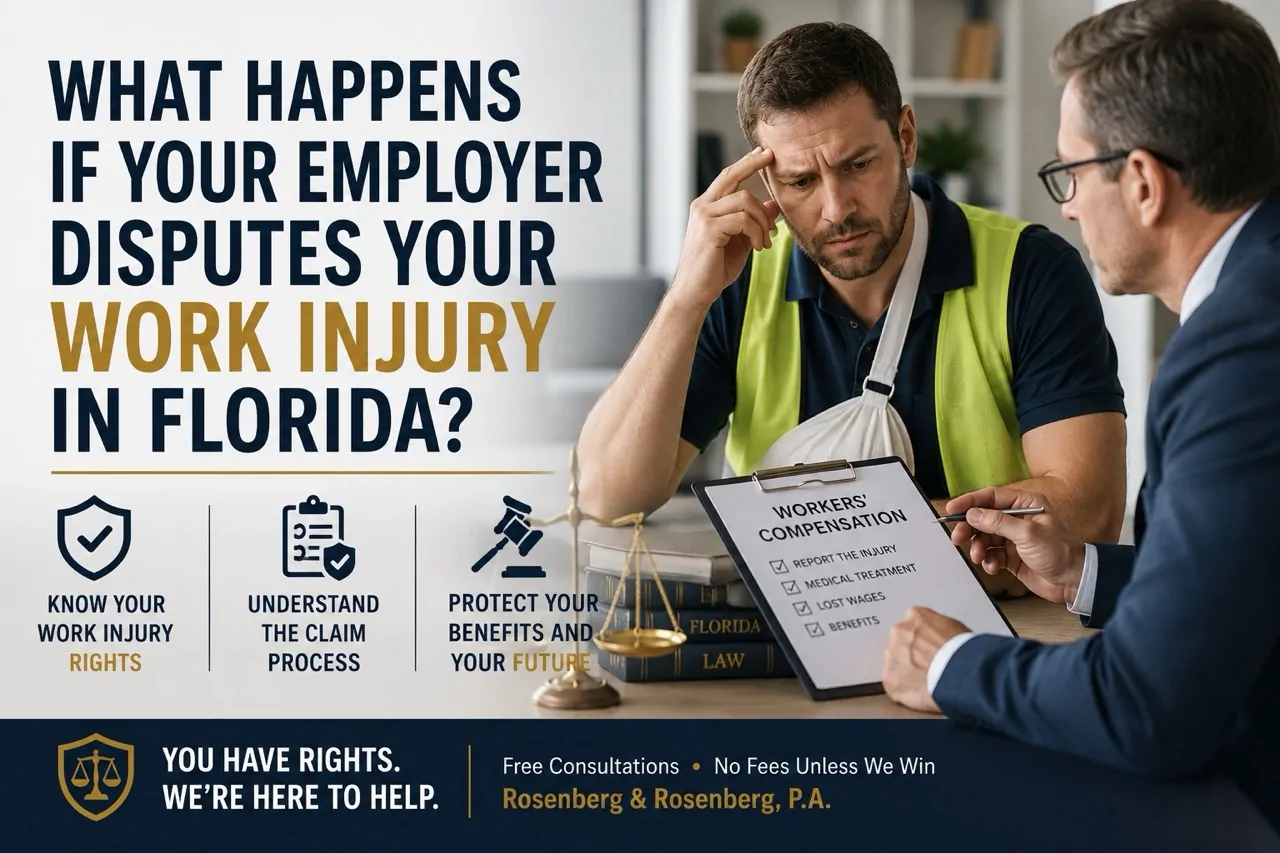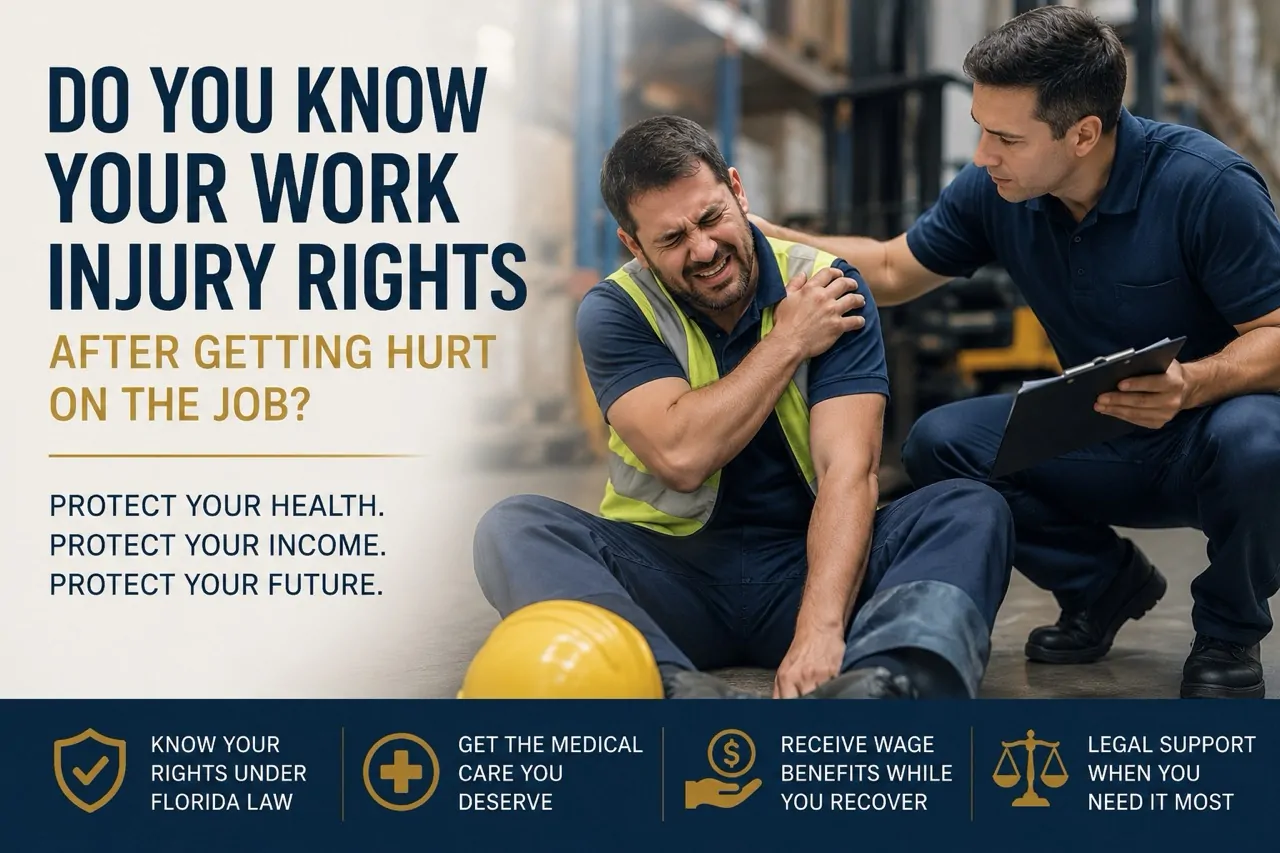
You got hurt at work. You reported it. Then your employer pushed back. Maybe they said the injury did not happen on the job. Maybe the insurance company started asking uncomfortable questions. Suddenly, a situation that already felt overwhelming became even more stressful.
Many Florida workers do not realize that employer disputes are more common than most people think. And a dispute does not automatically mean you lose your right to benefits.
Knowing your work injury rights in Florida is critical at this stage. Here is what every injured worker in Florida should know when an employer fights back.
Why Employers Sometimes Dispute Work Injury Claims
Disputes can arise for many reasons, and they do not always reflect the full picture of what happened. Employers and their insurers may challenge a claim to limit financial liability or because they genuinely question the circumstances. Knowing the most common reasons disputes occur may help you anticipate what you are up against and prepare accordingly.
Here is a closer look at why employers push back on work injury claims in Florida.
Claiming the Injury Did Not Happen at Work
One of the most common disputes involves the location or timing of the injury. An employer may argue that the accident occurred outside of working hours or away from the job site, removing it from the scope of workers’ compensation coverage entirely.
Alleging a Pre-Existing Condition
Insurers sometimes argue that the worker’s injury existed before the workplace accident. They may claim that the job did not cause the condition but simply aggravated something that was already there, which can complicate or limit available benefits.
Reporting Delays and Documentation Issues
If an injury was not reported promptly or documented clearly, employers and insurers may use that gap to question the legitimacy of the claim. Delays in reporting are one of the most commonly cited reasons for disputing or denying a workers’ compensation case in Florida.
Disputes About Medical Treatment or Severity
Even when an injury is acknowledged, the extent of it may be disputed. An insurer may argue that the recommended treatment is excessive or that the worker has already recovered sufficiently, leading to challenges around the ongoing need for medical care or wage replacement.
Florida Law Gives Injured Workers Real Protections
Florida’s workers’ compensation system exists specifically to support employees who are hurt on the job. Even when an employer disputes a claim, the law provides injured workers with meaningful rights throughout the process. These protections do not disappear simply because someone pushes back.
Every injured worker in Florida should be aware of the following rights.
The Right to Report a Workplace Injury
Florida law gives every worker the right to formally report a work-related injury to their employer. This right exists regardless of fault. Employers cannot legally prevent workers from filing a report, and retaliation for doing so is prohibited under state law.
The Right to Seek Approved Medical Treatment
Injured workers have the right to receive medical care covered by their employer’s workers’ compensation insurer. In Florida, the insurer typically selects the authorized treating physician. That care must be provided when medically necessary and connected to the work-related injury.
The Right to Pursue Workers’ Compensation Benefits
If an employer or insurer disputes your claim, you still have the right to pursue benefits through the Florida workers’ compensation system. This includes the right to file a Petition for Benefits and present your case before a judge of compensation claims if needed.
Protection Against Workplace Retaliation
Florida law prohibits employers from retaliating against workers who file workers’ compensation claims. This includes termination, demotion, reduced hours, or any other adverse employment action taken in response to a legitimate injury report.
What to Do Immediately If Your Employer Disputes Your Injury
When a dispute arises, how you respond in the early stages matters significantly. Taking the right steps right away may help protect your Work Injury Rights and keep your claim on solid ground.
- Report the injury in writing as soon as possible — a written record creates a timestamp and prevents your employer from later claiming they were never notified of the incident.
- Keep copies of all medical records and accident reports — these documents form the backbone of your claim and should be stored somewhere safe and accessible.
- Document conversations with supervisors or insurance representatives — write down the date, time, and content of any relevant conversations while the details are still fresh in your memory.
- Follow your prescribed medical treatment carefully — gaps in care or ignored recommendations give insurers reason to argue that your injuries are not as serious as claimed.
- Avoid posting details about the injury on social media — even casual posts can be taken out of context and used by insurers to undermine your claim.
- Consider speaking with a Florida workers’ compensation lawyer — early legal guidance may help you avoid missteps and respond to the dispute more effectively.
How a Workers’ Compensation Dispute Is Handled in Florida
When an employer or insurer disputes a work injury claim, Florida law provides a structured process for resolving the disagreement. The process is designed to give both sides an opportunity to present evidence and have the matter reviewed fairly.
Here is how a typical dispute unfolds in Florida.
Insurance Company Investigation
Once a claim is disputed, the workers’ compensation insurer typically launches a formal investigation. They may review accident reports, speak with witnesses, and examine medical records. The goal is to determine whether the injury qualifies for coverage under the policy and applicable Florida law.
Independent Medical Evaluations
An insurer may request that the injured worker be examined by a physician of their choosing. This is called an Independent Medical Examination. The results are used to form an opinion about the nature, cause, and severity of the injury, which may conflict with findings from the worker’s own treating physician.
Filing a Petition for Benefits
If a claim is denied or benefits are not being provided, an injured worker may file a Petition for Benefits with the Florida Office of the Judges of Compensation Claims. This formal step initiates the legal dispute process and sets timelines for the insurer to respond and for the case to proceed.
Mediation and Hearings Before a Judge
Most workers’ compensation disputes in Florida go through mediation before reaching a formal hearing. A neutral mediator facilitates discussion between both parties to try to reach a resolution. If mediation does not resolve the dispute, a judge of compensation claims will review the evidence and issue a ruling.
Evidence That May Help Support Your Work Injury Claim
Strong evidence is one of the most effective tools an injured worker has when facing a dispute. The more clearly documented your injury is, the harder it becomes for an insurer or employer to successfully challenge your claim.
Accident reports filed with your employer are among the first pieces of evidence to preserve. These establish that the injury was reported and when. Medical records that begin shortly after the accident are equally important. They create a timeline connecting your diagnosis directly to the workplace incident.
Statements from coworkers who witnessed the accident or observed your condition afterward can also add meaningful support. If photos or videos of the scene were taken at the time of the injury, those should be saved immediately. Physical evidence such as defective equipment or unsafe conditions should be documented before anything is repaired or replaced.
Can You Be Fired for Reporting a Work Injury in Florida?
This is one of the most searched questions among injured Florida workers, and the concern is completely understandable. Florida law prohibits employers from retaliating against workers who file or pursue a workers’ compensation claim. This protection applies to termination, demotion, schedule reductions, and other adverse employment actions. However, proving that a termination was retaliatory rather than based on a legitimate business reason can be difficult.
Employers do not always make their motives obvious. Warning signs of potential retaliation include being let go shortly after filing a claim, sudden changes to job duties, or unexplained negative performance reviews following an injury report. If you believe your employer acted against you because of your claim, speaking with a legal professional may help you understand whether your situation warrants further action.
Common Mistakes That Can Hurt Your Work Injury Claim
Even workers with legitimate injuries sometimes make mistakes that weaken their claims. Being aware of these pitfalls may help you avoid them during a dispute.
- Waiting too long to report the injury — Florida’s 30-day reporting window is strict, and delays give employers and insurers grounds to question whether the injury is work-related.
- Ignoring medical advice or missing appointments — inconsistent treatment creates gaps that insurers use to argue your injuries are less serious than claimed.
- Giving inconsistent statements — what you tell your employer, the insurer, and your doctor should all align; contradictions can damage your credibility significantly.
- Failing to document symptoms and treatment — keeping a personal record of your pain levels, limitations, and appointments strengthens your overall case.
- Returning to work too soon without medical clearance — going back before a doctor approves it can worsen your condition and signal to the insurer that your injuries have resolved.
Learn More About Your Work Injury Rights in Florida
A disputed work injury claim is stressful, and you should not have to face it without support.
Rosenberg & Rosenberg, P.A. has been standing by injured workers across South Florida for over 50 years. We understand how much is at stake when your health and income are being questioned.
Our team is available 24 hours a day, 7 days a week. We offer free consultations and charge no fees unless we recover for you.
Speaking with our team may help you understand your work injury rights and what options may be available in your situation.
Disclaimer: The information in this article is provided for general informational purposes only and should not be considered legal advice. Reading this content does not create an attorney-client relationship with Rosenberg & Rosenberg, P.A. Every workplace injury case is different, and results depend on the specific facts and circumstances involved. You should speak with a qualified attorney about your specific situation. Rosenberg & Rosenberg, P.A. serves clients in Hollywood, Fort Lauderdale, and surrounding communities throughout South Florida.